Starting a website for your business takes six steps in a fixed order: decide what the site must do, pick a domain name, buy hosting, choose how to build it, prepare your content, and launch with Google connected. You do not need to write code to do any of it. You only need to know what each step is for, so nobody can sell you something you do not need.
I am Hasan, a web and app developer in Riyadh, and this is the order I follow with owners who are building their first site. I will explain every technical word the first time it appears. If you only want the money side, I cover it separately in how much a small business website costs in Saudi Arabia.
Key takeaways
- A business website needs four things: a clear goal, a domain name, hosting and content. Everything else is built on those.
- Decide the goal first. A site that exists only because everyone has one rarely brings customers.
- Register the domain in your own name or your company’s name and keep the login. Most ownership problems start here.
- A small first site of five or six pages is enough. You can add more later.
- Launching is not the finish line. Connect Google Business Profile and Search Console so customers can actually find you.
The six steps at a glance
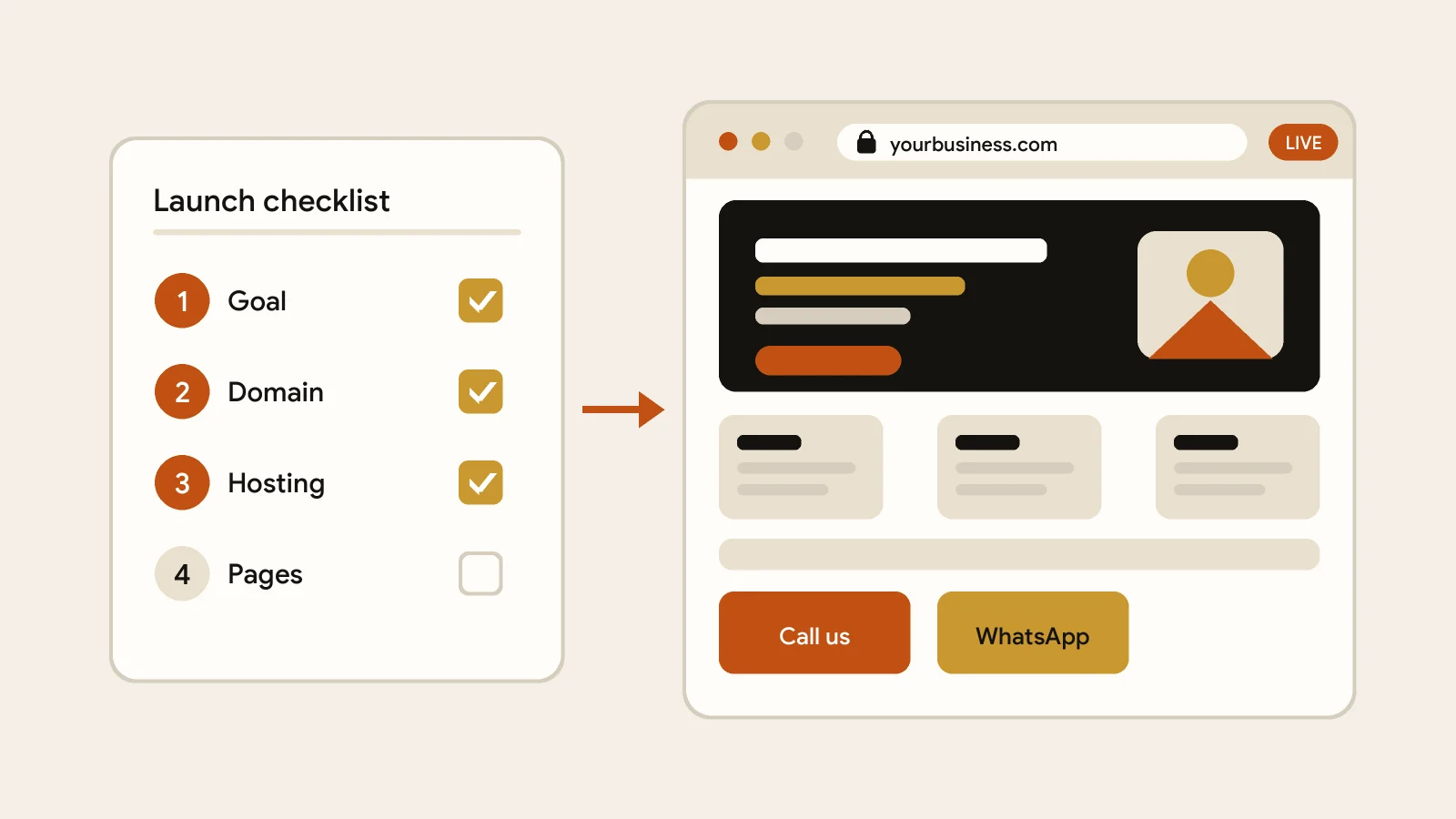
Here is the whole path on one screen. The rest of this article explains each step and what to watch for.
- Decide the goalwhat should a visitor do: call, message on WhatsApp, book or buy
- Choose a domain nameyour web address, such as yourbusiness.com
- Buy hostingthe computer that keeps your site online all day
- Choose how to builda website builder or WordPress
- Prepare content and pagestext, photos, logo, prices and contact details
- Launch and connect Googlepublish, then add Business Profile and Search Console
Step 1: Decide what the website must do
Before you spend any money, write one sentence: what should a visitor do after reading the site? For a clinic it may be “book an appointment”. For a bakery, “send a WhatsApp order”. For a contractor, “request a quote”. That sentence decides how many pages you need, what the buttons say, and whether you need online payment at all.
Most first-time owners skip this and start with colours and logos. That is how sites end up looking nice and bringing no calls. Pick one main goal and, at most, one backup goal.
- I know the one action I want visitors to take.
- I can describe my ideal customer in one sentence: who they are, where they are and what they need.
- I know which language my customers read: Arabic, English or both.
- I have a list of the questions customers ask me most often. These become the content of the website.
Step 2: Choose and register a domain name
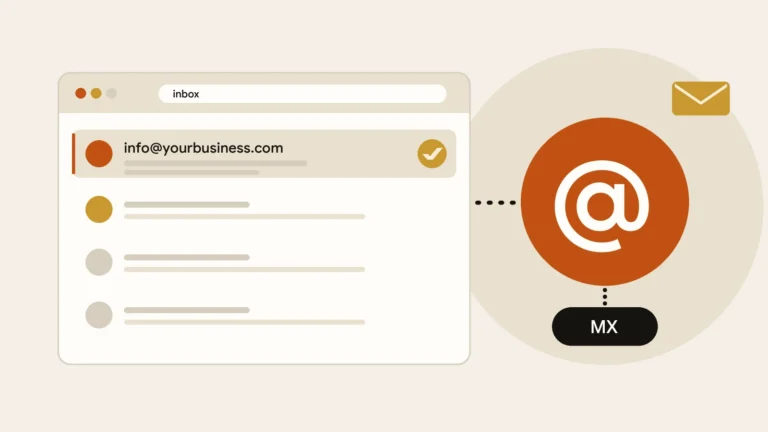
A domain name is your web address, for example yourbusiness.com. Customers type it to reach you, and it is also the part that comes after the @ sign in a business email later on. You do not buy a domain forever. You rent it, usually one year at a time, and renew it.
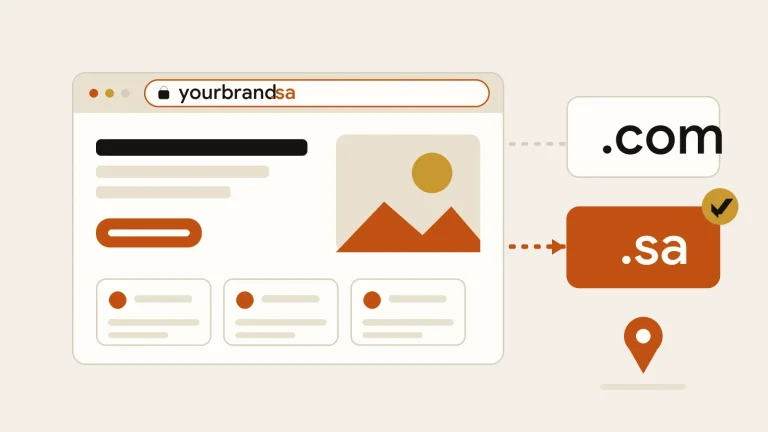
You register a domain through a company called a registrar. ICANN, the organisation that coordinates domain names worldwide, explains that common names such as .com are sold through accredited registrars and their resellers, while country domains are registered through that country’s operator. For .sa names, the Saudi domain registry says new registrations for individuals and businesses go through licensed registrars, and it publishes the list on nic.sa.
Choose something short, easy to say on the phone and easy to spell. Avoid hyphens and numbers when you can.
Tip
Register the domain under your own name or your company’s name, with an email address you control. If a designer or agency registers it under their name, you can end up unable to move or renew it. Ask for the login details on day one.
Step 3: Buy hosting
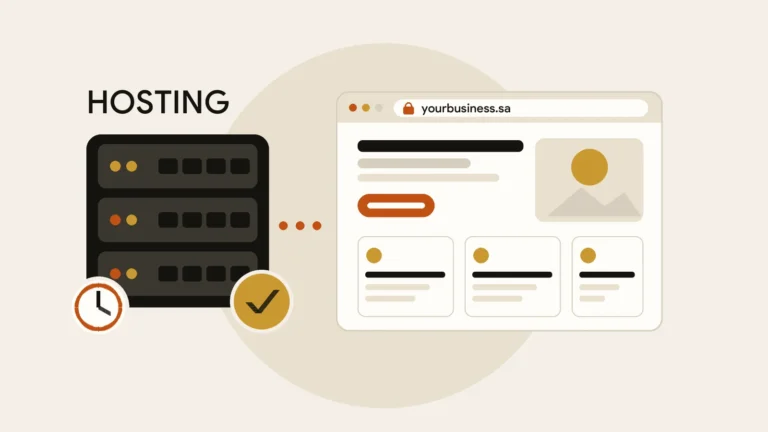
Hosting is a computer that is always on and always connected to the internet, and your website’s files live on it. When someone types your domain, their browser asks the hosting computer for your pages. No hosting, no website, even if you own the domain.
A simple way to remember the three pieces:
| Piece | What it is | Everyday comparison | Who you pay |
|---|
| Domain name | Your web address | The street address of your shop | A registrar |
| Hosting | Where your files are stored and served | The land and the building | A hosting company |
| Website | The pages, photos and text visitors see | The shop inside: shelves, sign and products | You, or a developer who builds it |
For a small business site, shared or managed hosting is normally enough. What matters is that the plan supports what your website software needs. WordPress, for example, recommends PHP 8.3 or newer, MariaDB 10.11 or newer or MySQL 8.0 or newer, and HTTPS support. You can simply ask a hosting company whether a plan meets those recommended requirements, and a good one will answer yes or no.
Also ask where backups are kept and how quickly support replies. Those two things matter more than the name on the box.
Step 4: Choose how to build the site
There are two common routes for a first business site. A website builder is a service where you drag and drop pages inside the company’s platform and pay a monthly fee that includes hosting. WordPress is free software you install on your own hosting, which gives you more control and lets you move the site later.
Website builder
- Quick to start
- The monthly fee includes hosting
- Harder to move away from later
- Check how it handles right-to-left Arabic before you commit
WordPress (my usual choice)
- Free software, and the files are yours
- Can move to another host if needed
- Flexible for Arabic and English
- Needs someone to keep it updated
I compare both honestly in WordPress vs website builders. If you are unsure, ask yourself one question: will this site still be mine in five years if I leave the company that built it? Choose the route where the answer is yes.
Step 5: Prepare your content and pages
Content is the part that delays most websites. A designer can build a page in days, but cannot invent your prices, your story or your photos. Gather these before you begin:
- Your logo as a high-quality file
- Real photos of your work, your team or your products
- A short text about what you do and who you serve
- Services or products with prices, or a clear “ask for a quote” line
- Phone number, WhatsApp, address, opening hours and social links
- Customer reviews you have permission to show
For a small business, five or six pages are enough to start: Home, About, Services or Shop, Contact, and a page answering common questions. The pages a small business website needs lists them in detail.
Common mistake
Leaving placeholder text or stock photos of strangers on a live site. Visitors notice quickly, and it makes the whole business feel less real. Fewer pages with true content always beat more pages with filler.
Step 6: Launch, then help people find you
Before launch, test the site on a phone first, because most visitors will open it there. Click every button, send yourself a test message through the contact form, and check that WhatsApp opens the right number.
After launch, two free Google tools matter most. Google Business Profile lets you manage your business information on Google, such as address, hours, contact details and photos, but you must claim and verify the business before it shows on Search and Maps. Google Search Console shows whether Google can see your site and which searches bring visitors. My local SEO checklist for Riyadh businesses walks through both.
A website is not finished at launch. It starts working when real customers can find it, trust it and contact you.
How long and how much should I expect?
Time depends mostly on you, not on the developer. A small site with ready text and photos can go live in a few weeks, and the slow part is almost always waiting for content and approvals. Cost depends on the number of pages, whether you need Arabic and English, whether you sell or take bookings online, and who writes the content. I do not quote numbers in a general guide because they change from project to project. The honest breakdown is in the small business website cost guide.
Beyond the first invoice, remember the yearly costs: domain renewal, hosting renewal, and someone to keep the site updated and backed up.
Mistakes I see first-time owners make
- Starting with design before the goal. Colours come last, not first.
- Letting someone else register the domain in their name. You may struggle to get it back.
- Buying the cheapest hosting without asking about backups and support. A slow or hacked site costs more than the saving.
- Launching and never updating. Old prices and opening hours quietly lose customers.
- Getting contact details wrong. One wrong digit in the phone number and the site fails at its main job.
If you would like help working out the right starting point for your business, you are welcome to get in touch. I am happy to give an honest view, even if the answer is that you do not need a big project yet.
References

 Business Websites
 Business Websites
 Business Websites