A free website builder is fine for testing an idea or running a small, temporary page. A ready-made template is the right start for most new small businesses. A custom website pays off when your business needs something a template cannot do. The real differences between a free website builder vs a custom website are not about how pretty they look. They are about who controls the site, what it costs after the first year, how hard it is to move later, and how far it can grow.
I am Hasan, a web and app developer in Riyadh. I build custom WordPress sites, so I have a stake in this question, and I will say plainly when the cheaper option is the better one. This guide is for owners who want a first website, or who are wondering whether to leave a free one behind. If you want the tool-by-tool view, I covered it in WordPress vs website builders. This article is about the business decision, not the software.
Key takeaways
- Free builders suit tests, events and temporary pages. For a business that must bring customers for years, treat free as a trial.
- A template website is the sensible start for most small businesses with a normal structure: home, services, about, contact.
- A custom website pays off when you need exact features, a native Arabic and English site, or links to other systems.
- Ownership matters more than looks. Your domain, hosting account and admin login should be in your name.
- Count the cost over two years, not only the first month.
The three options in plain words
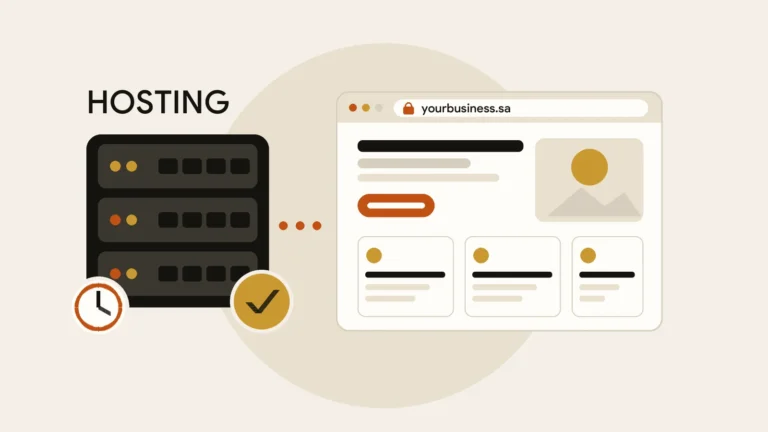
A free website builder is an online tool where you drag blocks onto a page and the company hosts the result for you. Hosting is the computer that keeps your site online all day; I explain it in domain, hosting and website explained in plain words. The free plan costs nothing, but it comes with limits.
A template website starts from a ready-made design that you fill with your own text and photos. It can run on a paid plan of a builder, or on WordPress with a theme, which is simply a ready-made look. You pay for a plan or for hosting, but not for design from scratch.
A custom website is planned and built around your business: your pages, the path a customer takes, the features you need. Custom does not mean a strange technology. Many custom sites, including mine, run on WordPress. What is custom is the design and the logic.
| What you compare | Free builder | Template | Custom |
|---|
| Upfront cost | Lowest, no plan fee | Low to medium | Highest |
| Your own domain (yourbusiness.com) | Usually needs a paid plan | Yes | Yes |
| Ads or platform branding | Often shown on free plans | Usually removed on paid plans | None |
| Time to launch | Days | Days to a few weeks | Several weeks |
| Fit to your exact needs | Limited | Medium | High |
| Moving later | Often means rebuilding | Depends on the platform | Easiest when you control the hosting |
Plans and rules change, so read each provider’s current terms before you pay. The table shows the usual pattern, not a promise from any one company.
What “free” usually costs you
The WordPress.com pricing page shows how this works for one well-known provider. Free sites display ads to visitors, and the free plan gives you an address on the provider’s own domain (yoursite.wordpress.com) instead of your own. Using your own domain and installing plugins sit on paid plans. Other builders have their own rules, but the pattern is similar: free to start, paid to look like a real business.
Common mistake
Printing a long free address on your business card and Instagram bio. If you move later, every printed card and every link still points to the old address.
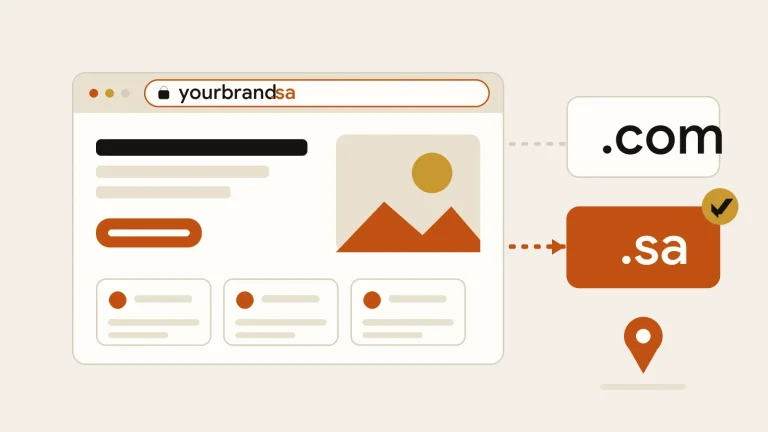
A domain is the address people type to reach you. Owning it is the one thing that lets you change builder, host or developer without losing your name online. I wrote about this in who owns your website.
Free can still be the right choice. A one-off event page, a student project, a quick test of a business idea, or a page you will delete in three months do not need a paid plan. If the site is meant to win customers for years, the free plan is a trial, not a home.
Where templates shine, and where they stop
For a shop, clinic, studio or service business with a normal structure, a good template is often enough. It launches quickly, costs less than a custom build, and a designer can adjust colours, fonts and layout so it fits your brand. Start with the pages every small site needs, which I listed in what pages a small business website needs.
Tip
Before you pay for any plan, ask three questions. Can I use my own domain? Can I export my pages and content if I leave? Can I edit page titles and descriptions for Google? Google’s SEO starter guide notes that most content management systems can turn the titles you write into the page title automatically, so the last answer is usually yes, but confirm it.
Templates have limits. Other businesses in your city may use the same design. Arabic support varies a lot, because Arabic reads right to left and some templates handle it badly, with flipped buttons or broken menus. And anything specific, such as booking rules, a price calculator or a link to your accounting system, may be impossible, or may need paid add-ons that stack up month after month. If your site must work well in two languages, read bilingual website design for Saudi businesses first.
When a custom website is worth it
Custom costs more and takes longer, so it should earn its place. These are the signs I look for.
- You need Arabic and English versions that both feel native, not translated by a plugin.
- You take bookings, quotes or orders with rules a template cannot follow.
- The site must connect to other tools, such as accounting, a customer list or delivery.
- You compete in a crowded local market and need a design and message that do not look like everyone else’s.
- You want your files, hosting and data under your control, so you can move whenever you like.
- Your catalogue or traffic is growing and you keep fighting the limits of your template.
If none of these apply, you probably do not need custom yet. Starting with a template and upgrading when the business proves the need is a sound plan. If I think a template will do the job, I say so. For an idea of what a custom build costs, see how much a small business website costs in Saudi Arabia.
A website is cheap to start and expensive to move, so choose the option you can leave.
Ownership matters more than looks
Whichever option you choose, check that four things are in your name: the domain, the hosting or plan account, the admin login and your content files, meaning your text and photos. If one of them belongs to a designer or a friend, you depend on them.
One confusing point: WordPress.com and WordPress.org sound the same but are different. WordPress.com is a hosted service with plans. WordPress.org offers the free WordPress software, and its download page describes it as being for people who get their own hosting and domain. With the second, you rent hosting and control the site.
Rented space
- The platform decides ads, features and price changes.
- Free plans put your site on the platform’s address.
- Moving usually means rebuilding the site.
Space you control
- Domain, hosting and admin login are in your name.
- You can change host or developer without losing your address.
- You pay for hosting and keep the site updated, or pay someone to do it.
How to decide in five steps
- Write the goal.One sentence: phone calls, WhatsApp messages, bookings or online orders.
- List your must-haves.Arabic and English, booking, online payment, a photo gallery.
- Count two years of cost.Plan fees, domain, hosting, add-ons and any designer time.
- Check the exit.Own domain, content export and admin access in your name.
- Pick the smallest option that meets the list.Then write down what would make you upgrade.
If you are unsure which of the three fits your business, send me a short message through the contact page. I will tell you which one I would choose in your place, even when it is not the one I sell.
References
- WordPress.com, Plans and pricing: free sites show ads, free plan address, plugins and custom domain by plan.
- WordPress.org, Download WordPress: the software is aimed at people who get their own hosting and domain.
- Google Search Central, SEO Starter Guide: titles, descriptions and content management systems.


 Business Websites
 Business Websites
 Business Websites